
Home / Science
Two platforms, one idea
Restore signalling that has gone wrong in the central nervous system — through the endocannabinoid system, or through the glutamate and GABA receptors that carry excitation and inhibition.
ResolutionRx
Pharmaceutical cannabinoids
The term cannabinoid refers to pharmacologically active substances originally found in the cannabis plant, which led to the discovery of the body’s own cannabinoids — endocannabinoids — that act on CB1 and CB2 receptors and influence respiration, appetite and convulsions.
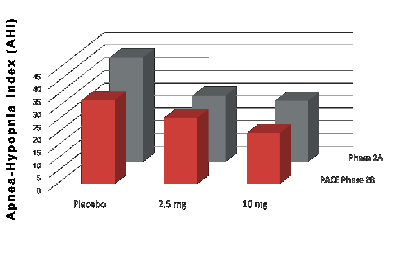
RespireRx’s route is not a new molecule but a known one: dronabinol (Δ-9-THC), approved by the FDA as Marinol in 1985 for AIDS-related anorexia and later for chemotherapy-induced nausea and vomiting, re-purposed for obstructive sleep apnea.
Because the molecule is already approved, the company believes it can pursue a 505(b)(2) NDA — a path that lets the FDA rely on studies the applicant did not conduct, and which can be faster and less expensive than a full 505(b)(1) submission.
EndeavourRx
Neuromodulators
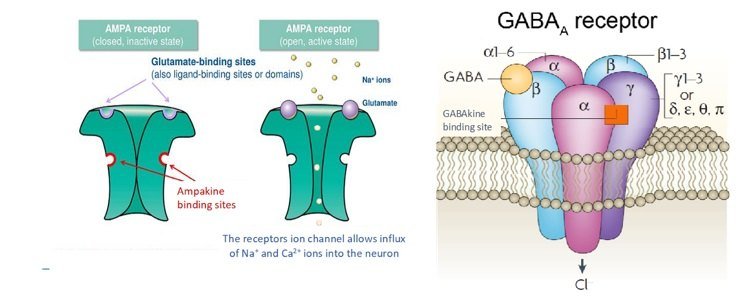
Two families of positive allosteric modulator: one that turns up the AMPA glutamate receptor, one that tunes the GABAA receptor.
AMPAkines
Kinder AMPAkines
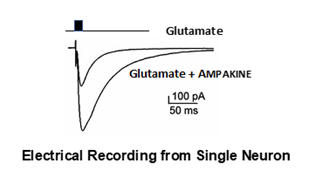
AMPAkines are small molecules that enhance the excitatory actions of glutamate at the AMPA receptor complex, which mediates most excitatory transmission in the CNS.
The company’s family — CX717, CX1739 and CX1942 — belongs to a new class of low-impact AMPAkines that do not show the convulsive effects reported in earlier generations.
CX717 and CX1739 completed multiple Phase 1 safety trials with no drug-associated serious adverse events, and were efficacious in opioid-induced respiratory depression without altering the analgesia — replicated in three Phase 2A trials.
GABAkines
Separating the effects of the benzodiazepines
The GABAA receptor is a pentameric chloride channel built from a family of subunits; benzodiazepines act as PAMs across all of them, which is why they carry sedation, tolerance and dependence alongside their anti-anxiety effect.
Dr. Lippa described CL218,872, the first non-benzodiazepine to show the receptors were heterogeneous by binding selectively to a subtype — and with ocinaplon, an analogue, reported a Phase 2 trial in anxious patients in which anxiety fell without sedation.
RespireRx’s lead GABAkine, KRM-II-81, is in development for epilepsy and chronic pain. Translational work in human brain tissue removed from epilepsy patients validated its anti-epileptic effect, and preclinical work reported pain relief for the non-opioid compound.
Where the platforms point
OSA
Dronabinol, two Phase 2 trials, no approved drug class competitor.
ADHD & SCI
AMPAkines with Phase 2 ADHD data and a DoD-funded Phase 2 in spinal cord injury.
Epilepsy & pain
KRM-II-81, validated in human tissue and in preclinical pain models.